
Quad Cortex Signature Course
Unlock the full potential of the Signature Preset
Unlock the full potential of the Signature Preset
This video is critical for you to start on the right foot with the Signature Preset. Since the Presets have been dialed in with my guitars, you will likely need to make some adjustments to the EQ and level to best suit your guitar and pickups. This video shows you exactly where to start.
I explain the very first block in the signal chain, the Input block, as well as what my I/O settings and Global EQ are. I also show you how to calibrate an expression pedal and provide an explanation on how to best leverage your CPU (DSP).
The Looper is a fun tool I use mainly for ambient bed textures for underscore moments but it can be used for lots of fun solo work as well. This video gives you a basic understanding of how to use it and an example of how I specifically use it.
The Transpose and Poly Octaver are the two Pitch effects I use in the Signature Preset. I explain how and in what contexts I use these effects and some tips on CPU usage if you rarely use these effects.
My approach to EQ is unique in this Preset and, by default, I leave the included 8-band EQ bypassed in favor of a couple other methods of EQ. However, the EQ block can be a useful tool that I walk you through in this short video.
Adding external analog pedals via the FX Loops is a fantastic way to expand the possibilities of the Quad Cortex. This video shows you how to set up the FX Loops to get the most out of them as well as some tips on making sure you get the exact right volume from your effects.
This massive video gives you a deep dive on most of the drives included with the Preset as well as some cherished tips and tricks on how to use the Gain, EQ, and Volume on the Capture Blocks to create some truly inspiring drive tones not possible with even the captures’ analog counterparts.
This video breaks down every control on the 3 included Modulation effects in the Preset—Chorus, Tremolo, and Vibrato. I show you my favorite settings as well as some tips on using them with drives.
I use two Delay blocks in the Preset but use them very differently from each other. This video describes why I chose the Dual Delay, how to approach it, and how I use the Reverse Dual Delay to achieve a sound similar to a Microcosm.
I use one Reverb block before my amps and another one after. This lets me leverage each algorithm to enhance their unique strengths. This video gives you insight on all the parameters and how I dial them in for different moments.
Here I explore all the nuances of the Amp captures included in the Preset and a thorough explanation on headroom and how exactly to tweak stereo amps to have equal dynamics. I also dial in my “3” captures from scratch and show you how to approach a dirtier base tone if you so desire.
This video goes much further than a simple tour of the Phase Doctor block and dives deep into the full topic of polarity and phase. I help you fully grasp the various concepts of phase and how it applies specifically to electric guitar so you can best approach the nuances of dialing in stereo amps.
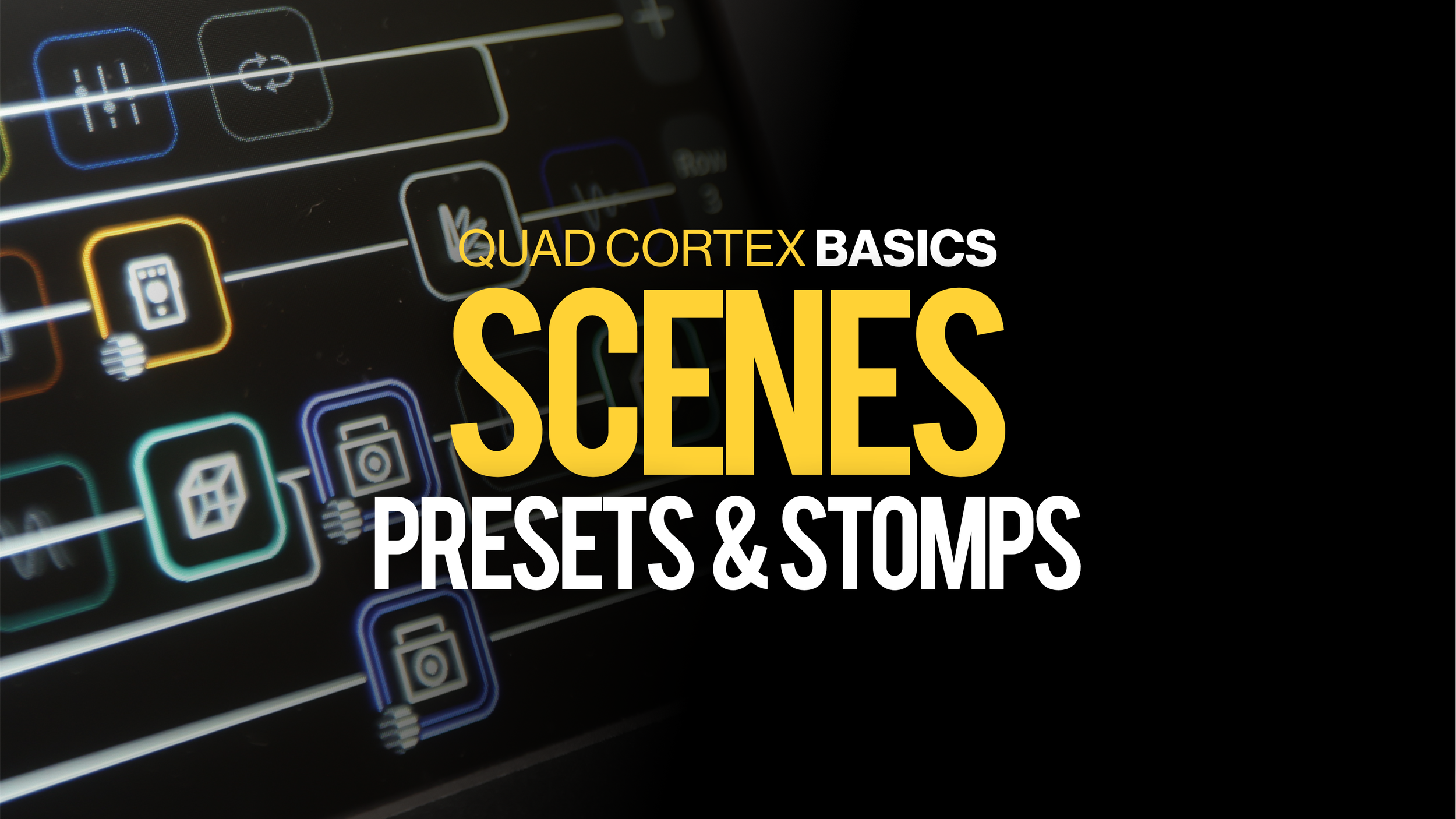
Understanding how Presets, Scenes and Stomps work on the Quad Cortex is fundamental. This video gives you a ton of information on how Scenes work, how to assign parameters and blocks to Scenes and Stomps, and how to effectively use Hybrid Mode as well as some global settings you’ll need to engage.
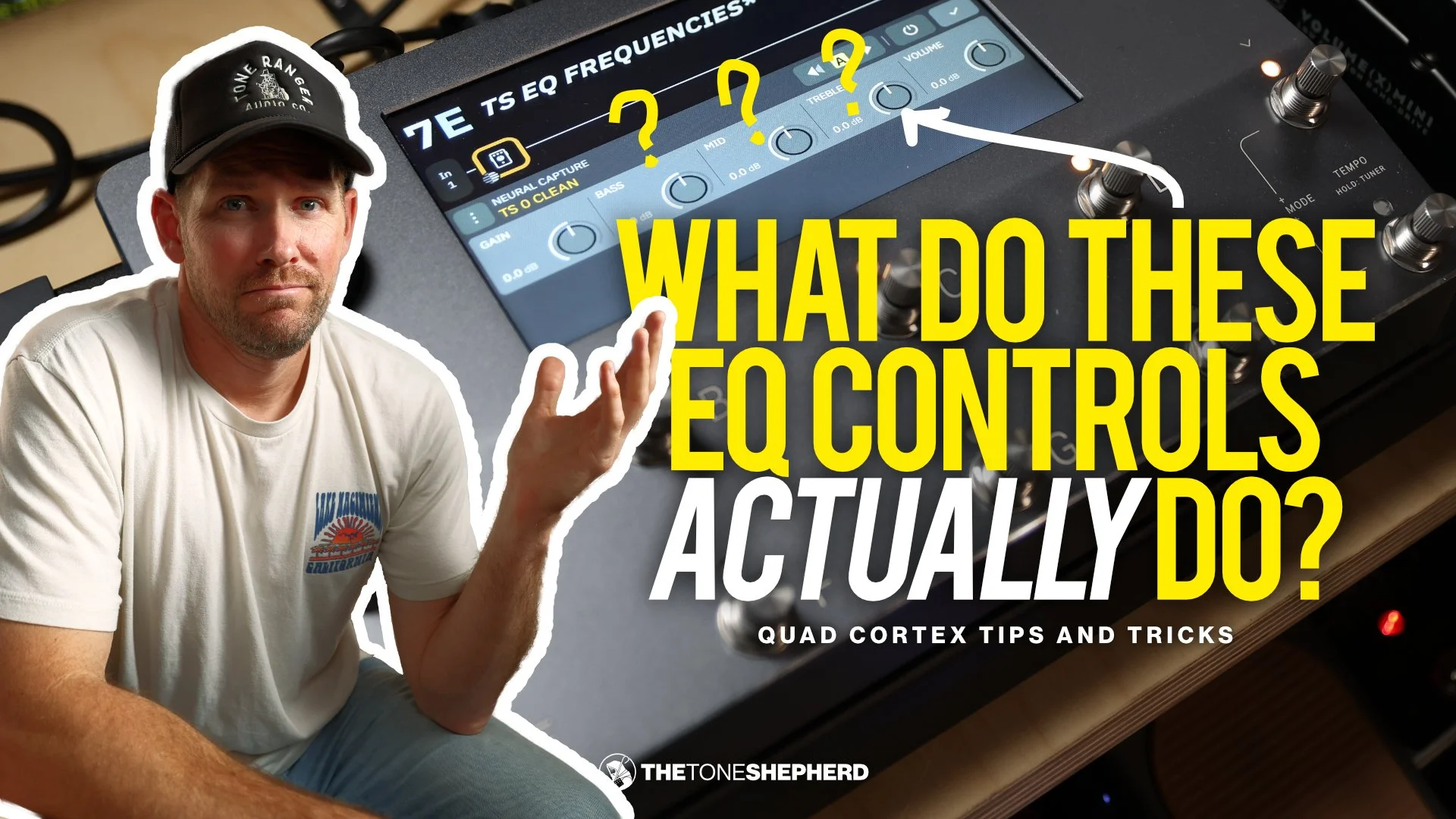
Knowledge is power. Discover exactly what frequencies the Bass, Mid, and Treble knobs affect on a capture block in the Quad Cortex.

Playthrough and Devotional on YouTube: https://youtu.be/JlNlZSHKIng

Playthrough and Devotional on YouTube: https://youtu.be/zuB7rHU2bYw

Playthrough & Devotional on YouTube: https://youtu.be/l4Zi7-PZE6M